
The Case for The Sublime
How beauty saves the world

The word “sublime” has been chasing me over the last few days, like a quiet suitor, leaving suspicious hints in unconnected places. First, it was on the poem I read on Saturday in the tub, then in the sermon I listened to on Sunday before bed, and just last night in Anthony Veasna So’s essay, “Baby Yeah”. It felt less like coincidence and more like a summons. So here I am, answering its call and writing, or better yet, listening in.
I used to think beauty was superfluous, something we could live without, or reserved for a certain kind of life. I picked up the identity of the good, responsible girl very early, and rejected the aesthetic norms that made me feel less than, or that might draw unwanted attention. The first chink in my armor was 20 years ago, as I walked with my sister down the cobblestone hill off the street of our childhood home in Brazil. I was 10 years old, her 14, and we were talking about our weekend plans when she mentioned her nail appointment the next day.
I scoffed. “Again? How could anyone waste money on that?”
I pictured the women I knew from the neighborhood who were known frequenters of the salon.
My sister responded so softly I almost missed it: “Maybe you don’t see them as deserving.”
She always had a gentle way of softening my judgment. I wanted to respond, but my tongue was a stone in my mouth. Because I knew she was right. I imagined the other women’s nails—fire-engine red, chipped by Monday, the polish peeling like sunburnt skin. I imagined the money they spent, money that should’ve been folded into envelopes for rent or meat, and I felt the hot rush of superiority. As if my bare nails were medals, the same way my mother’s were; proof of her love and self-sacrifice, while the other moms’ smooth hands proved their vanity. I thought beauty rituals like this were something you earned. A reward for endurance, for going without, or a luxury granted only to those who didn’t struggle so much.
The women at the nail salon were always laughing. Not the polite, clipped laughter of women who are scared of being seen, but the deep, unselfconscious kind—the kind that comes from somewhere low in the belly, where the weight of the world can’t reach. I judged them for it. Their joy confused me, the same way my own joy confused me before I learned to contain the paradox of an existence that is difficult and full of love and laughter at the same time. How could all of this be true at the same time?
I took my overwhelming contradictions to church, the place that reaffirmed the identity I had already adopted at that point to survive: the obedient girl, the daughter who knew there was more to life than what the world taught us to revere. Unfortunately, it was also a place that amplified the internalized shame that had been passed down to me. We’re sinners seeking eternal salvation.
But those women practiced much more faith than I at their manicure altar. They were making a declaration: I exist. I matter. And I will not let my circumstances dictate my right to beauty. They were co-creators of their own salvation, reclaiming their inherent righteousness as vessels of the divine, despite the seemingly eternal despair and ugliness that coexists with the sublime.
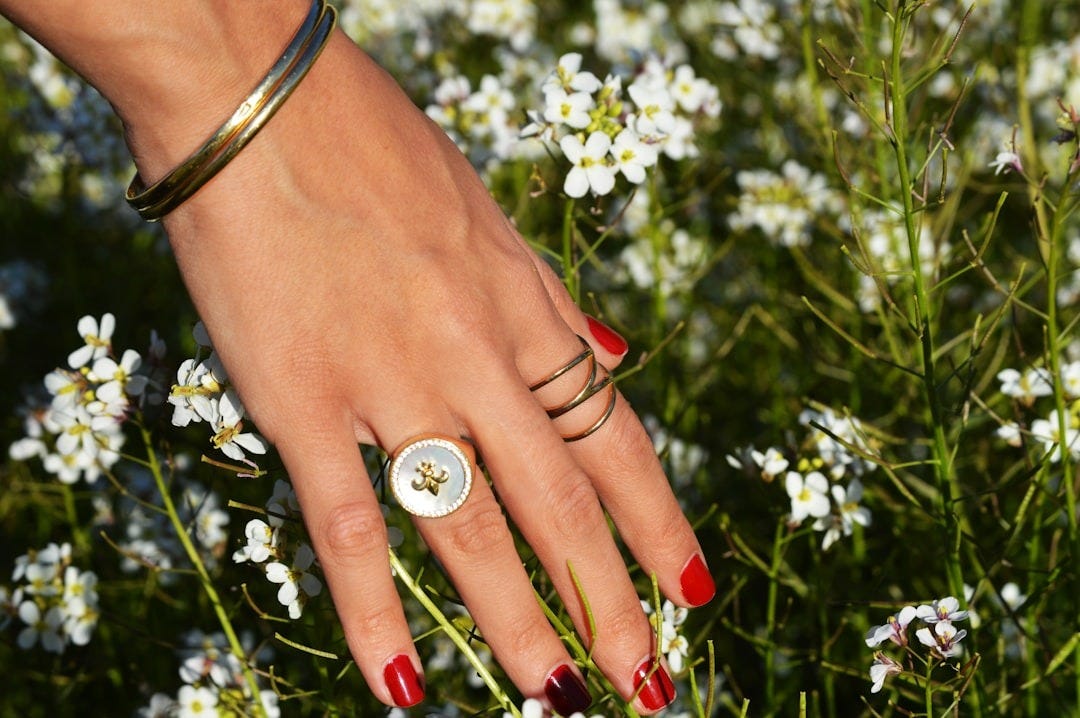
Over time, finding that kind of genuine beauty became my new religion. Actually, it found me. I stopped trying to do the math of how many moments of sacrifice + altruism = being worthy of enjoyment, of walking the narrow path where life is light, like picking a nail color to match my dress. I stopped calculating if I had lived through enough happy days to even out the bad ones, to make existence worth it, to justify staying a little longer. I simply looked at the sky, looked at me, and said “wow, I’m that.” And in that moment I understood: this was Salvation. Not the kind preached from pulpits, but the kind that shakes your bones when you finally see yourself as part of what you’ve been chasing.
Isn’t that what Dostoevsky meant when he said beauty would save the world? Not the theologically rich sermons or philosophies, the prophesies parsed into proof, or the passionate calling for penitence to make space for holiness. It’s the stubborn, daily beauty that finds you in the chaos and has the power to lift you right out of the fucking madness, asking for no repentance or interpretation. Just to be seen and beholden.
Beauty is the woman in debt who still paints her nails because she refuses to disappear. It’s the sound of my mother’s laugh. The dog at the park that brings back the ball every single time. The bluebird playing rope maze through the hedges. The way our breath keeps moving in and out of our chest when we’re not even noticing. Beauty as the quiet insistence that life—your life—is worth tending to exactly as it is. That’s where it waits: in the cracks of the ordinary, proving that beauty isn’t a reward for the worthy, but a roadmap to remaining truly alive while we’re alive.
Sometimes we’re just too busy doing math to see it.
Tell me: What’s the last thing that made you stop and stare? The last time you heard the sublime talking, or playing hide-and-seek in the stories you’re reading? Listen in. The more out of place it feels, the more it clashes with the grief that’s standing right next to it, the more it longs to be beholden.
Omg yes. I think this kind of beauty is one of the reasons we humans continue to be alive, to get up every day in this brutal world of ours